Field Service Examples: 9 Industries and On-Site Jobs
Explore field service examples in HVAC, plumbing, electrical work, landscaping, cleaning, restoration, and inspections, with practical on-site task examples.
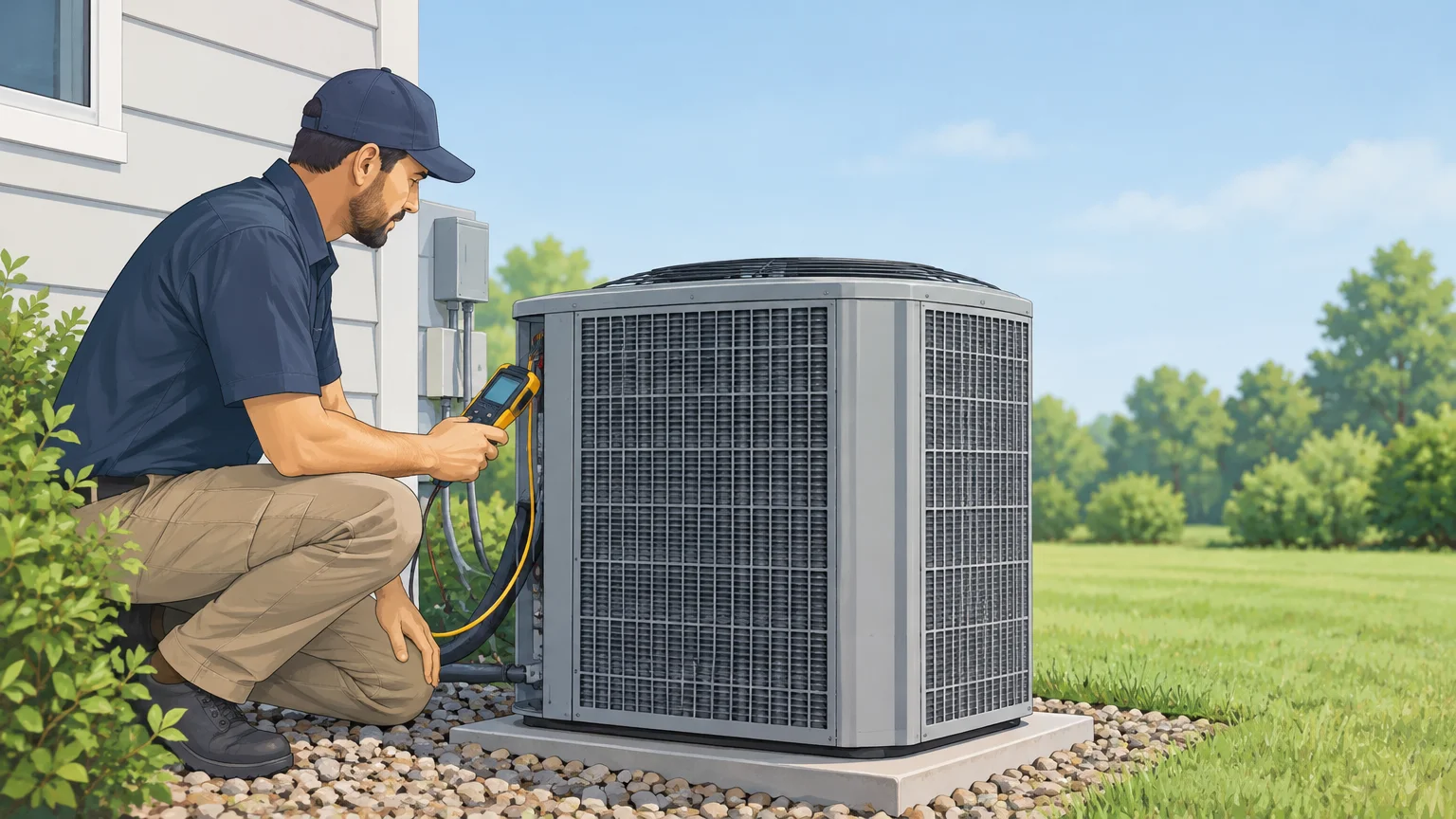
What counts as field service? It is work performed at a customer’s property, business, infrastructure site, or another location away from the provider’s office. The range is broad, from repairing a home heat pump to inspecting commercial equipment. For an overview of the trades that fit connected field workflows, see our field service industries page.
Common field service examples include repairs, installations, preventive maintenance, inspections, and restoration. The industry tells you what kind of business performs the work, while the task describes what happens at the site. Keeping those two ideas separate makes it easier to understand the range of field work and how teams manage it.
Which industries rely on field service?
Field service applies wherever a worker travels to install, inspect, repair, maintain, or restore something at a customer’s location. Residential trades are familiar examples, but the category also includes support for commercial buildings, industrial equipment, utilities, and technology infrastructure.
For example, a 2025 survey of 100 field service leaders included telecommunications and utilities, industrial equipment, medical equipment, HVAC and facilities, and technology support. These examples illustrate the range of field service industries, rather than defining a complete list. See the Geotab-sponsored survey for its respondent categories.
What are examples of field service work by trade?
A technician’s specific job depends on the trade, the equipment or property, and the customer’s request. These examples show how different on-site service work fits the same broad category.
- HVAC services include diagnosing heating or cooling faults, replacing components, installing equipment, and completing seasonal maintenance. Our HVAC services page covers this trade as a field-service category.
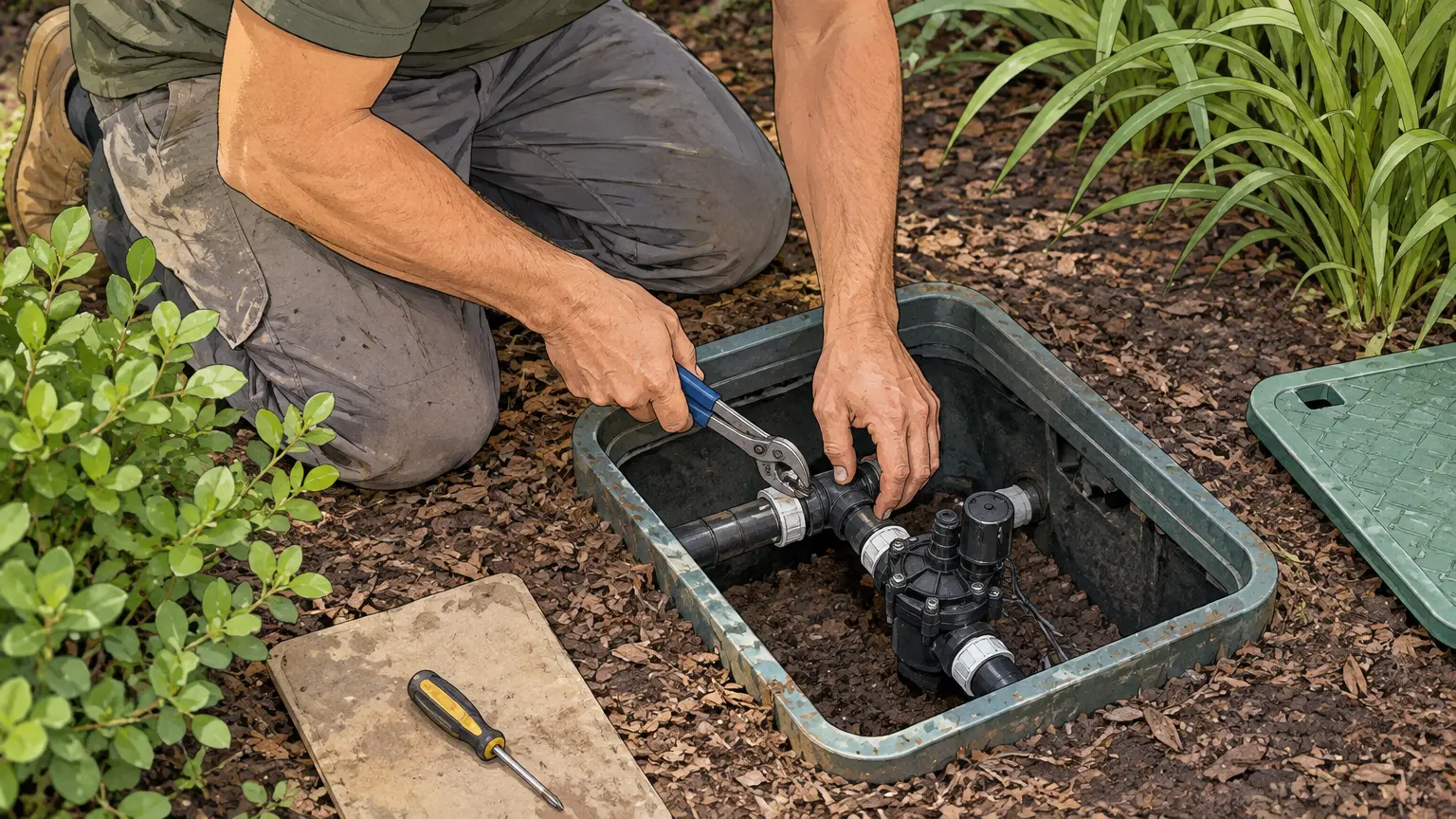
- Plumbing services range from finding leaks and clearing drains to installing fixtures and checking completed repairs. Our plumbing services page focuses on this type of work.
- Electrical contracting can involve troubleshooting circuits, installing lighting or equipment, and inspecting electrical systems.
- Landscaping services include maintaining lawns, trimming plants, installing irrigation, and handling property cleanup. Our landscaping services page describes this trade category.
- Cleaning businesses travel to homes or commercial sites to perform recurring or one-time cleaning jobs.
- Mold remediation and water restoration can require an initial assessment, on-site treatment or cleanup, and follow-up work.
- Radon mitigation and inspection services involve testing or assessing a property, documenting findings, and arranging any necessary next steps.
- General contracting may involve coordinating repairs, installations, and other work across a property or project site.
These examples describe different trades, not a limit on what counts as field service. Equipment repair, facility upkeep, and technical support also qualify when employees travel to a site to complete the work.
What tasks do field teams perform from first call to payment?
A single job often involves more than the time spent on site. A small contractor might receive a request, ask questions about the problem, prepare an estimate, schedule a visit, record the work, and send an invoice. Each step keeps the service request connected to the work performed.
At the site, a technician may inspect equipment, diagnose a fault, install or repair a component, take photos, complete a checklist, and record notes. After the visit, the business may need to document follow-up work, update the customer, or invoice for completed tasks. These records help the office and field team work from the same job details.
Deloitte’s 2026 report drew on a survey of 900 field service leaders; 55% identified advanced technology as the top competitive differentiator. That finding reflects surveyed leaders’ views, not a rule that every business needs the same tools. Read Deloitte’s 2026 report for its findings on service operations and technology.
For independent businesses, the practical test is whether customer details, estimates, schedules, job notes, and invoices stay connected as work moves forward. Our founder’s experience operating inspection and radon and mold businesses informs our focus on these handoffs, especially for inspections and multi-day remediation jobs.
How are field service examples changing with technical infrastructure?
Field service is not limited to home visits. Technicians also install, maintain, and repair physical technology at data centers, offices, network sites, and other facilities. Those jobs can involve access coordination, specialized equipment, service documentation, and response requirements tied to the site.
In a 2026 survey of 200 large-enterprise decision-makers, 56% expected AI infrastructure or AI-enabled devices to drive additional field-service demand through 2028. The finding concerns the surveyed enterprises, not every field-service business. The ISG study announcement also describes how remote diagnostics and automation can change which incidents require an on-site technician.
Whether the work involves a home system or enterprise equipment, the defining feature remains the same: a person travels to a location to complete service that cannot be handled entirely from the provider’s office. The tools, skills, and response expectations differ by job, but the work still needs clear scheduling and documentation.
How can you tell whether a job is field service?
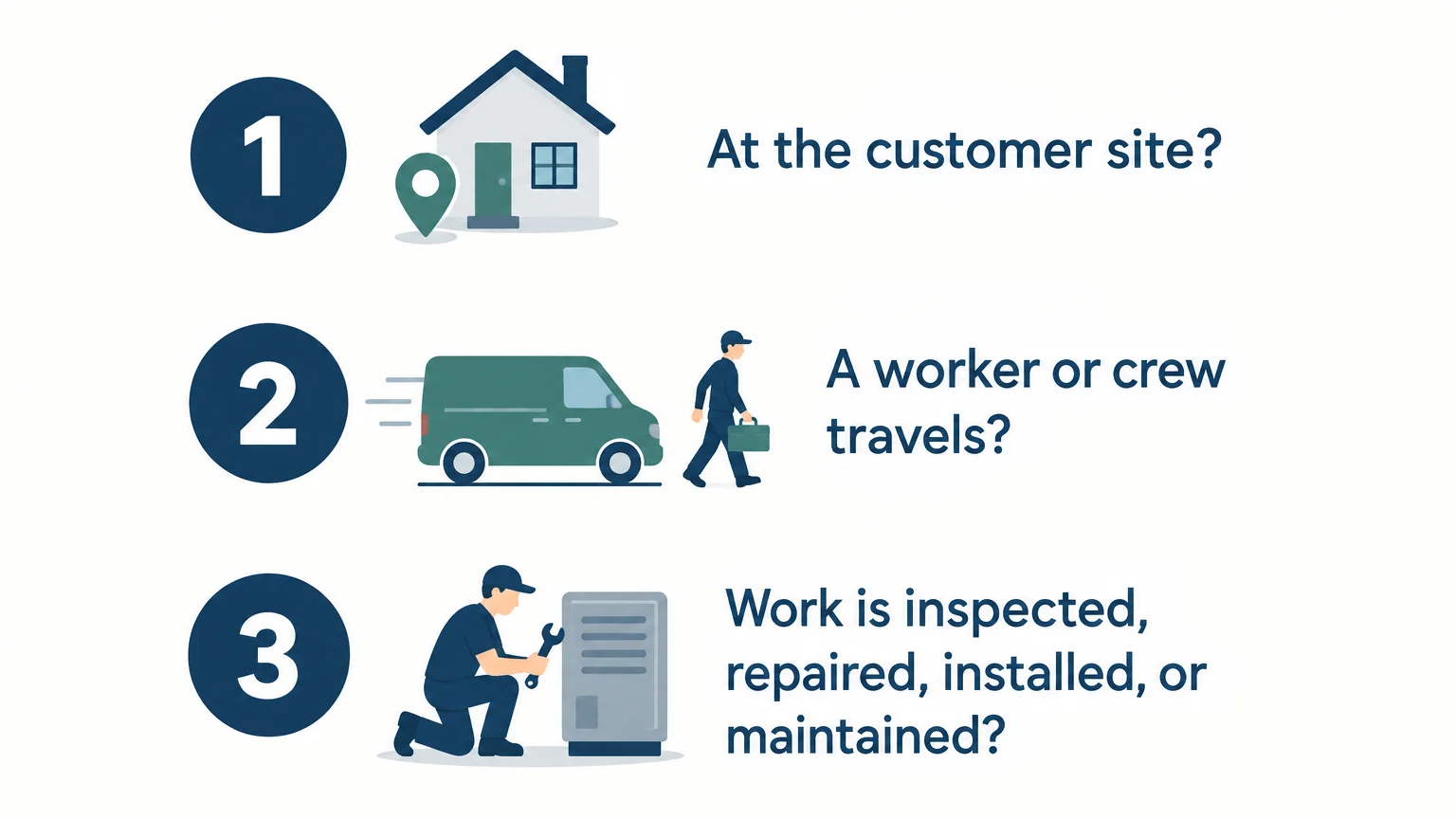
Use these questions to classify a job:
- Where is the work done? If a worker travels to a customer’s property, facility, or infrastructure site, it is likely field work.
- What does the worker do there? Installation, repair, inspection, maintenance, cleaning, and restoration are common examples.
- What follows the visit? The business may document results, schedule a return appointment, provide an estimate, or invoice the customer.
A job can still involve office tasks, remote diagnosis, or customer communication. The key distinction is that at least part of the service is completed by a worker at an external site.
Understanding field service work
Field service work covers services delivered at a customer’s location, from household repairs and property maintenance to technical support for business infrastructure. To identify an example, look at both the industry and the task: an HVAC company is the industry, while diagnosing a furnace fault is the work. That distinction clarifies what a team does and what its job workflow needs to capture.
Keep field jobs connected from request to invoice
When you manage on-site work, each job moves through customer communication, estimating, scheduling, field documentation, and billing. Keeping those details connected gives your office and technicians a shared view of the work, whether you run a solo trade business or coordinate a small crew.

Our field service management software connects customer and job records across lead capture, estimates and approvals, scheduling and dispatch, field notes, invoicing, and payment collection. You can choose a plan for your team size and try it free for 14 days. Explore field service management software to see how the workflow fits your business.
Frequently Asked Questions
What is a simple example of field service?
A plumber traveling to a customer’s home to repair a leak is a simple example. The work happens at the customer’s location rather than entirely at the provider’s office.
Are inspections considered field service?
Yes. Inspections involve visiting a property or site to assess conditions, record findings, and communicate any follow-up needs.
What is the difference between a field service industry and a field service task?
An industry identifies the type of business, such as HVAC or landscaping. A task describes the work performed, such as repairing a unit or maintaining a property.
Can field service work include more than repairs?
Yes. It also includes installations, maintenance, inspections, cleaning, and restoration. Many jobs combine several tasks during one or more site visits.
How can a small business organize field service jobs?
Keep customer details, estimates, appointments, field notes, and invoices linked to each job. Our field service management software connects these steps in one workflow for owner-operators and small crews.